Tanzania hosts several International Airports that serve as key gateways for global travel, trade, and tourism. They are vital infrastructure serving multiple roles: facilitating tourist arrivals, enabling international trade, supporting employment, and connecting regions both within the country and to the rest of the world. Over decades, these airports have evolved in response to rising travel demand, advances in aviation standards, and the country’s development priorities.
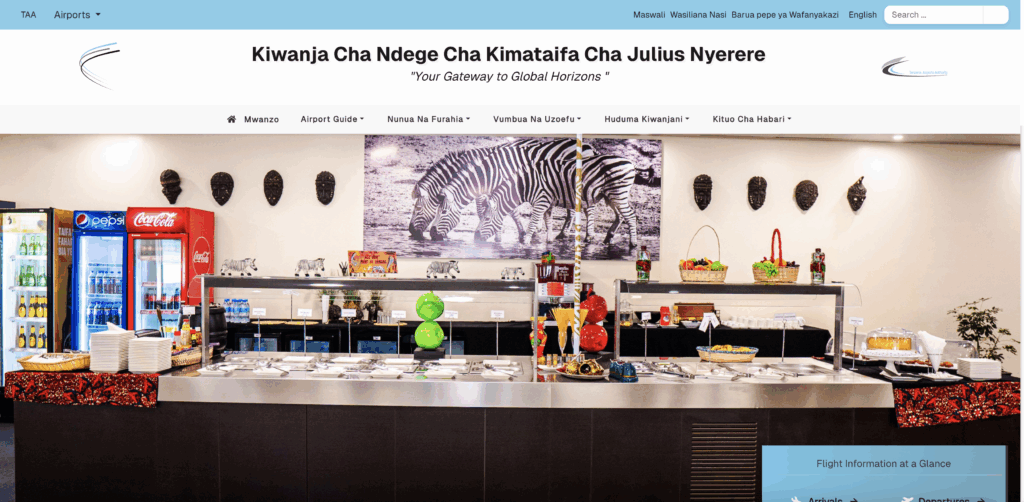
1. Julius Nyerere International Airport (JNIA), Dar es Salaam
Background / History
- Opened in 1954 (Terminal One) in the Ukonga area.
- In 1984, Terminal Two was inaugurated (by President Nyerere), expanding capacity for domestic and regional flights.
- Construction of Terminal Three begun in 2013, with Phase I opening in August 2019; Phase II completed later, bringing the international handling capacity to higher levels.
Duties & Responsibilities
- Serving as Tanzania’s main international gateway: largest and busiest airport in the country, handling most international arrivals and departures.
- Handling cargo, facilitating customs, immigration, security, passenger safety. Also managing domestic and regional flights via domestic terminals.
- Supporting commercial services: retail, duty-free shopping, lounges, food & beverage, passenger experience enhancements. Also non-aviation revenue streams (hotels, commercial complexes).
Achievements
- Terminal Three design and functionality: high capacity (several million passengers), modern facilities, improved standards.
- Recognised in aviation audits: excellent results in ICAO security audits.
- Growth in usage: increasing number of international and domestic passengers; addition of new routes, airlines.
- Infrastructure expansion: plans for renovation of Terminal Two, proposal for four-star hotel and commercial complex; consideration of intermodal transport (e.g. rail shuttle link).
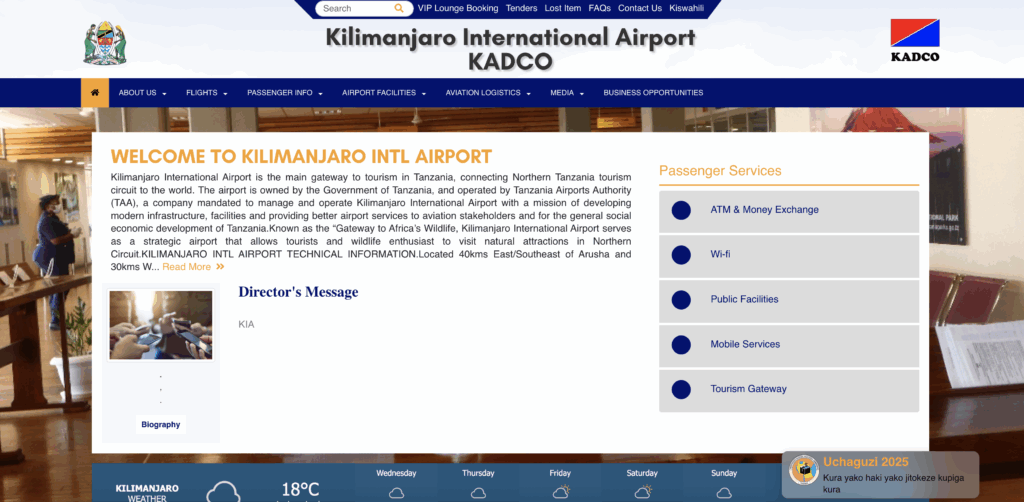
2. Kilimanjaro International Airport (KIA)
Background / History
- Officially inaugurated in December 1971
- Covers about 110 square kilometers, situated strategically between the Kilimanjaro and Arusha regions in northern Tanzania.
Duties & Responsibilities
- Handling international and regional passenger flights as well as domestic traffic.
- Cargo operations, baggage handling, aircraft ground services, flight operations, arrival and departure facilitation.
- Maintaining infrastructure: runway, terminal, navigational aids (e.g., ILS systems), safety, security, customs & immigration, passenger amenities.
Achievements
- Able to accommodate large aircraft including Boeing 747s and Antonov 124s, thanks to its runway length (3,600 meters) and supporting infrastructure.
- Passenger traffic growth: figures like 800,000 passengers annually before expansions; improvements aimed at doubling capacity from 600,000 to 1.2 million annually.
- Major renovation projects: upgrading runway, terminal facilities, VIP lounges, admin blocks etc., linked to broader national development plans.
3. Abeid Amani Karume International Airport (AAKIA), Zanzibar

Background / History
- The main international airport in Zanzibar, located on Unguja Island, about 5 km south of Zanzibar City.
Duties & Responsibilities
- Handling international and regional flights, connecting Zanzibar to East Africa, Europe, Middle East etc.
- Managing passenger services, cargo handling, security, customs & immigration, safety and standards certification.
- Maintaining infrastructure: terminals (including third terminal), passenger boarding bridges, baggage systems, security checkpoints, ensuring service quality and compliance with international aviation regulations.
Achievements
- Dramatic growth in passenger numbers and revenue: from about 840,600 passengers in 2020 (COVID-19 low) to over 2.4 million by 2025. Revenues increased from 11.6 billion Tanzanian shillings in 2019/20 to near 50 billion in 2024/25.
- Recognition and awards: Best Airport under two million passengers in Africa (Airports Council International / ASQ). High rankings for service quality (cleanliness, customer journey etc.).
- Safety & security compliance: e.g. received “A” grade in ICAO security audit.
Key Duties & Common Responsibilities Across Tanzanian International Airports
- Safety and Security
- Customs, Immigration, Health Protocols
- Infrastructure Maintenance and Expansion
- Passenger Experience
- Cargo & Trade Facilitation
- Regulatory & Environmental Compliance
- Revenue Generation & Non-Aeronautical Services
- National & Regional Connectivity
About the Author